 Dr. Naomi Ben-Ami
What Is Maladaptive Daydreaming? Test, Symptoms, and How to Stop
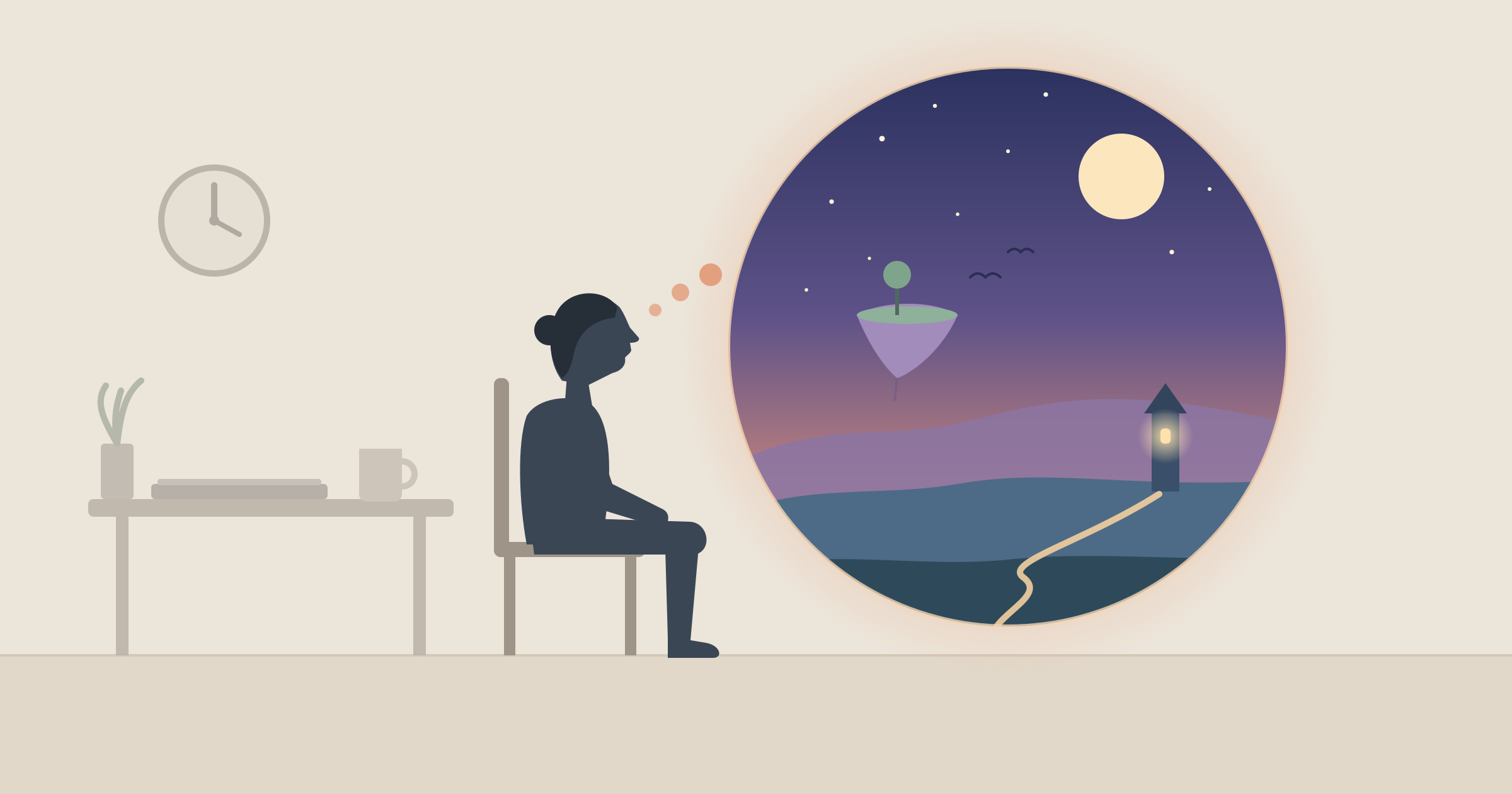
You daydream. Everyone does, and most of the time it is harmless, even pleasant. But maybe yours stopped being a passing distraction a while ago....


Key Takeaways
You say yes to the mutual aid shift even though you're running on four hours of sleep. You agree to help your neighbor move for the third time this year because that's what neighbors do here. You show up to the community meeting, the fundraiser, the solidarity event, even when your body is begging for a quiet night alone. And somewhere underneath all that showing up, there's a voice asking: if I say no, am I becoming the kind of person who moves to Brooklyn and takes without giving back?
The guilt isn't small. It sits in your chest like proof of something ugly you're trying not to become.
In a borough built on interdependence, where community care isn't just a value but often a survival strategy, setting healthy boundaries can feel like ideological betrayal. The tension is real, and it's not just in your head.
Brooklyn's identity is woven through with collectivism. From rent strikes to community fridges to neighborhood organizing, there's a deeply rooted ethic that we take care of our own. This isn't abstract theory—it's the friend who watched your dog when you had that crisis, the bodega owner who spotted you when your card was declined, the neighbor who brought soup when you had COVID.
But the same culture that creates genuine safety nets can also make individual limit-setting feel politically suspect. When you're surrounded by people fighting against isolation, capitalism, and displacement, protecting your own energy can be misread as opting into the very individualism that's eroding the neighborhoods you love.
This isn't paranoia. The fear has context. In heavily gentrified areas like Williamsburg, Bushwick, and Bed-Stuy, there's heightened awareness about who contributes to community and who extracts from it. The question "am I being selfish or am I setting a boundary?" carries different weight when selfishness has been weaponized in your neighborhood's transformation.
When your behavior contradicts your deeply held values, psychologists describe the resulting distress as moral injury. Originally applied to combat veterans, the concept increasingly helps explain civilian experiences where we feel forced to act against our ethical framework.
Saying no when someone needs help can trigger this response—not because the boundary is wrong, but because it creates genuine conflict between self-preservation and community responsibility. Both are legitimate needs. The injury comes from feeling you must choose.
For people in Brooklyn therapy practices, this presents as chronic guilt, decision paralysis, or the sense that you're always failing someone, including yourself.
Living in dense, diverse, high-stimulus environments means constant exposure to others' needs. Your building, your block, your group chat, your social circle—everyone is navigating rent anxiety, creative precarity, systemic injustice, or personal crisis. Often simultaneously.
Compassion fatigue describes what happens when empathic response becomes depleted through overextension. The complicating factor in community-oriented spaces is that reducing exposure feels like abandonment. So you override your capacity signals until you have nothing left—for others or yourself.
The irony: the more committed you are to collective care, the more vulnerable you become to empathy depletion.
In creative-class Brooklyn culture, your willingness to show up functions as social capital. Being the person who helps move furniture, who brings the good snacks, who knows someone who knows someone—these behaviors aren't just nice. They're how you establish belonging in a transient, expensive city where traditional markers of community (homeownership, long tenure, and family networks) are increasingly inaccessible.
Boundaries threaten that currency. If your value in the ecosystem comes from availability, then unavailability feels like social death. This isn't shallow—it reflects real precarity about connection in a place where loneliness and crowding coexist.
For many Brooklyn residents, especially those who moved here in the last decade, there's acute awareness of being implicated in displacement dynamics. Even if you're struggling to pay rent yourself, even if you've been priced out of three neighborhoods already, the fact remains: your presence is part of larger patterns.
This creates a psychological trap where setting boundaries feels like confirming the worst stereotypes about who you are and what you represent. The boundary becomes evidence. So you say yes even when yes is unsustainable, because no feels like admission.
If boundary-setting triggers disproportionate shame, if you're consistently overriding your needs to avoid imagined judgment, if the guilt interferes with sleep or decision-making, that's worth attention.
Chronic difficulty with boundaries often connects to:
- Anxious attachment patterns where connection feels conditional on usefulness
- People-pleasing rooted in childhood emotional neglect
- Hyperresponsibility that mistakes your limits for moral failure
- Codependency that confuses self-sacrifice with love
These patterns don't make you weak. They make you human. And they're treatable.
Healthy communities aren't built on equal simultaneous exchange. They're built on the understanding that everyone will need more at different times. The person who couldn't help you move this month might be the one who talks you through a breakup next month. Reciprocity across time, not transactions.
A therapist in Brooklyn, NY, can help identify where you've internalized impossible standards for what you "owe" and what genuine mutual aid actually looks like.
Boundaries don't have to be binary. "I can't do the full shift but I can cover the first two hours" or "I can't move furniture but I can watch your kids during the move" or "I can't make the meeting but I can review notes and email thoughts" are all boundary-setting.
Mental health approaches in Brooklyn often focus on expanding your range between total self-sacrifice and complete unavailability. There's space in the middle.
Naming the tension out loud—"I really want to help and I'm also at my limit"—can reduce the internal pressure. When you acknowledge both truths, the people who care about you usually respond with more flexibility than your anxiety predicts. The people who don't might be showing you something important about the relationship.
Counseling Brooklyn sessions frequently work on testing these assumptions in low-stakes situations to gather actual data about how people respond to your boundaries.
*The most sustainable community care includes caring for the community member you are. Self-preservation isn't betrayal—it's how you stay present for the long work.*
Boundary work in Brooklyn's cultural context isn't about choosing between self and community. It's about recognizing that you are part of the community you're trying to protect. Your exhaustion matters. Your limits matter. Not because you're special, but because you're not—because everyone deserves the same protection you're trying to give others.
This doesn't erase the real tensions around gentrification, individualism, or who bears the cost of care work. Those conversations are necessary and ongoing. But you can hold complexity: you can critique extractive individualism while also acknowledging that you need sleep, space, and the occasional night when you're not available.
At Williamsburg Therapy Group in Brooklyn, our therapists understand the specific cultural pressures of urban life in this borough—the way mental health struggles intersect with community values, identity, and the daily demands of New York existence. We also offer telehealth for when leaving your apartment feels like one thing too many.
If you're navigating the space between self-care and community care, between protecting your energy and staying connected, a Williamsburg therapist can help you find language, tools, and permission for boundaries that honor both your values and your limits.
The work isn't choosing between yourself and your community. It's building a version of both that you can sustain.

Why does setting boundaries feel so hard in Brooklyn specifically?
Brooklyn's identity is woven through with collectivism, from rent strikes to community fridges to neighborhood organizing. The same culture that creates genuine safety nets can also make individual limit-setting feel politically suspect. When you're surrounded by people fighting against isolation, capitalism, and displacement, protecting your own energy can be misread as opting into the very individualism that's eroding the neighborhoods you love.
What is moral injury and how does it apply to boundary-setting?
When your behavior contradicts your deeply held values, psychologists describe the resulting distress as moral injury. Originally applied to combat veterans, the concept increasingly helps explain civilian experiences. Saying no when someone needs help can trigger this response, not because the boundary is wrong, but because it creates genuine conflict between self-preservation and community responsibility. Both are legitimate needs.
What is empathy fatigue, and why does it hit harder in Brooklyn?
Compassion fatigue describes what happens when empathic response becomes depleted through overextension. Living in dense, diverse, high-stimulus environments means constant exposure to others' needs. The complicating factor in community-oriented spaces is that reducing exposure feels like abandonment. The irony: the more committed you are to collective care, the more vulnerable you become to empathy depletion.
How does gentrification awareness complicate boundaries?
For many Brooklyn residents, especially those who moved in the last decade, there's acute awareness of being implicated in displacement dynamics. This creates a psychological trap where setting boundaries feels like confirming the worst stereotypes about who you are. The boundary becomes evidence, so you say yes even when yes is unsustainable, because no feels like admission.
When does difficulty with boundaries signal something deeper?
If boundary-setting triggers disproportionate shame, if you're consistently overriding your needs to avoid imagined judgment, or if guilt interferes with sleep or decision-making, that's worth attention. Chronic difficulty with boundaries often connects to anxious attachment, people-pleasing rooted in childhood emotional neglect, hyperresponsibility, or codependency.
What actually helps with boundary-setting in Brooklyn?
Redefining reciprocity helps: healthy communities aren't built on equal simultaneous exchange but on the understanding that everyone needs more at different times. Boundaries don't have to be binary, granular nos and creative yeses ("I can't do the full shift but can cover two hours") expand your range. Externalizing the conflict by naming both truths out loud can also reduce internal pressure.
You daydream. Everyone does, and most of the time it is harmless, even pleasant. But maybe yours stopped being a passing distraction a while ago....

Not long ago, the term love bombing barely existed outside of niche psychology circles. Today it is everywhere, and that shift is no accident. The...
Some people cannot sit through a meal without feeling a surge of rage at the sound of chewing. Others feel their chest tighten when a colleague taps...