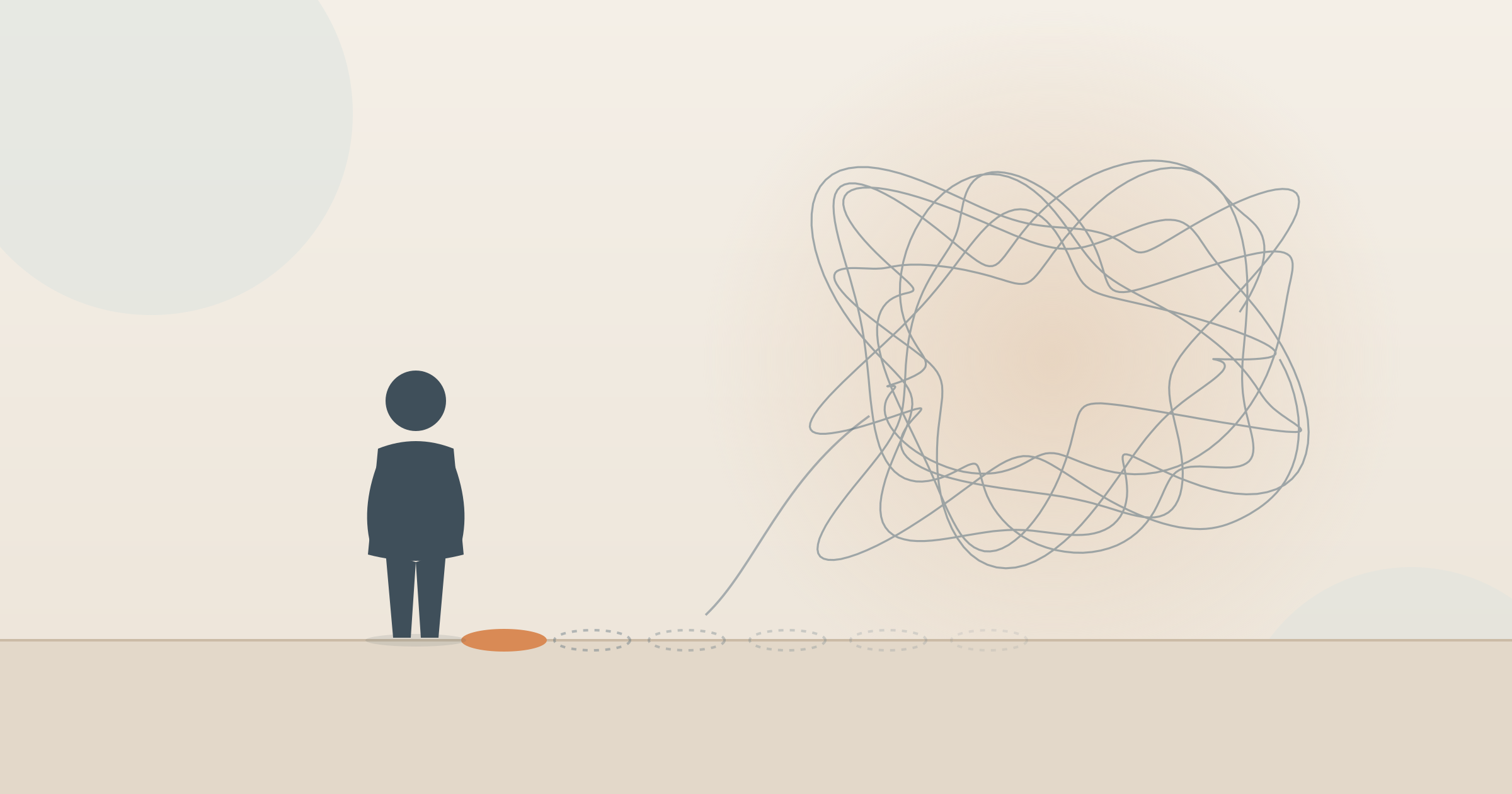
Executive dysfunction is a difficulty with the mental skills that help you plan, start, organize, and finish tasks, and manage your attention and emotions along the way. It is not a diagnosis on its own but a symptom that appears across several conditions, and it is one of the defining features of ADHD. For many people with ADHD, it takes a particularly painful form often called task paralysis, knowing exactly what needs to be done and still being unable to begin.
If that sounds familiar, you have probably been called lazy, unmotivated, or careless at some point, and you may have started to believe it. Those labels miss what is actually happening. Executive dysfunction reflects a difference in how the brain manages effort, not a lack of caring, and understanding it is often the first step toward treating yourself with more patience.
What Is Executive Dysfunction?
Executive functions are the brain’s management system. A foundational review in the Annual Review of Psychology describes three core abilities at their center, working memory, inhibitory control, and cognitive flexibility. Planning, reasoning, and problem solving are built on top of them. When these systems struggle, everyday tasks that seem simple to others can require enormous effort.
|
Executive function
|
What it does
|
What it can look like when it struggles
|
|
Working memory
|
Holds information in mind while you use it
|
Forgetting the next step halfway through a task
|
|
Inhibitory control
|
Filters distractions and manages impulses
|
Getting pulled away by every notification or thought
|
|
Cognitive flexibility
|
Shifts between tasks and adapts to change
|
Getting stuck on one activity and unable to switch
|
|
Planning and organization
|
Maps out the steps toward a goal
|
Not knowing where to begin with a larger project
|
The Cleveland Clinic makes an important distinction here. Procrastination is a conscious choice to delay something. Executive dysfunction is not, because the parts of the brain responsible for motivation, planning, and inhibition do not respond on command. It is not laziness, and it is not a sign that someone does not care.
Executive Dysfunction Symptoms
Executive dysfunction shows up differently for everyone, but common symptoms include:
- Difficulty starting tasks, especially ones that feel boring, unclear, or overwhelming
- Losing track of steps, time, or belongings mid-task
- Being easily distracted, or the opposite, becoming so absorbed in one thing that everything else disappears
- Struggling to move from one activity to the next
- Trouble estimating how long things will take
- Difficulty organizing thoughts into words or plans
- Acting or speaking impulsively before thinking it through
- Feeling mentally exhausted by tasks others seem to handle easily
Many people who experience these symptoms are painfully aware of them. The gap between what you intend to do and what you manage to do can be one of the most frustrating parts of daily life.
What Causes Executive Dysfunction?
Executive dysfunction has many possible sources, and knowing which one is involved matters, because treatment depends on the cause. The most common include:
- ADHD. The condition most closely tied to executive dysfunction, where it is present in nearly every case.
- Anxiety. Persistent worry takes up working memory, leaving less capacity for planning and starting tasks.
- Depression. Low energy, slowed thinking, and loss of motivation can make even small tasks feel impossible.
- Autism. Differences in planning, flexibility, and transitions are common.
- OCD and substance use. Both can disrupt how the brain manages attention and impulses.
- Brain injury and neurological conditions. Concussion, stroke, multiple sclerosis, and dementia can all affect executive function.
- Temporary strain. Severe sleep deprivation, chronic stress, and burnout can produce executive dysfunction even without an underlying condition.
These causes often overlap. Someone with ADHD may also live with anxiety, and depression can make existing attention difficulties far heavier. When anxiety is a central driver, targeted anxiety support can ease the load on executive function considerably.
Executive Dysfunction and ADHD
Executive dysfunction is considered a core part of ADHD rather than a side effect. Brain regions involved in executive function tend to be less active or develop differently in people with ADHD, and the condition often continues into adulthood, as the NIMH notes.
Motivation is a large part of the picture. Brain imaging research published in JAMA found lower levels of dopamine markers in the brain’s reward pathway among adults with ADHD, and those differences were linked to symptoms of inattention. In practical terms, tasks without an immediate reward can feel almost impossible to start, while interesting or urgent tasks may suddenly become easy. This is not inconsistency or a lack of effort. It is how the ADHD brain allocates motivation, and it explains why advice like “just push through” so rarely helps.
What Is ADHD Task Paralysis?
ADHD task paralysis is not a clinical term, but it describes something very real. It is the experience of freezing in front of a task you want or need to do, sometimes for hours, while the pressure and guilt quietly build. You might sit with the document open, pick up your phone, put it down, and pick it up again. You know the consequences. You may even have a plan. And still, nothing starts.
In our clinic, this is one of the experiences people find hardest to explain to others, because from the outside it looks like choosing not to act. From the inside, it feels like being stuck behind a wall you cannot see.
Task paralysis tends to take a few recognizable forms:
- Overwhelm paralysis. The task feels too big or too vague to know where the first step is.
- Decision paralysis. Too many options or priorities, and choosing one feels impossible.
- Low-reward paralysis. The task is necessary but uninteresting, and the brain cannot find the motivation to begin.
- Fear-based paralysis. Worry about doing it imperfectly makes starting feel risky.
- Transition paralysis. Being unable to stop one activity and move into the next.
The Weight of Shame
Many adults with ADHD carry years of being told they could do better if they only tried harder. Over time, that criticism tends to become internal. Each stuck moment turns into evidence of a personal failing, and the shame that follows makes the next start even harder. It becomes a cycle, and it is not one anyone chooses.
If this resonates, please know that the difficulty you feel is real, it has a neurological basis, and it does not define your worth or your effort. Many of the people who struggle most with task paralysis care deeply about the very tasks they cannot begin.
Task Paralysis or Something Else?
Feeling stuck is not always ADHD. Paralysis rooted mainly in fear and dread may point toward anxiety, while a heavy flatness where nothing feels worth doing may signal depression. These often coexist with ADHD, which makes them easy to confuse. If you are unsure what is behind the struggle, a formal evaluation can clarify the picture and point treatment in the right direction.
How to Overcome ADHD Paralysis
Overcoming task paralysis is rarely about forcing yourself harder. It is about lowering the barrier to starting until it becomes small enough to step over. The strategies below help many people, and it is fine if only some of them work for you.
- Shrink the first step. Make it almost too small to resist, such as opening the file or writing a single sentence. Starting is usually the hardest part.
- Get the steps out of your head. Writing tasks down and breaking them into concrete actions reduces the load on working memory.
- Remove friction in advance. Set out what you need the night before, so the beginning requires fewer decisions.
- Work in short bursts. Commit to a few minutes with a timer. If you keep going, wonderful. If not, a few minutes still counts.
- Borrow structure from others. Many people find it easier to work alongside someone else, in person or virtually, a strategy often called body doubling. Research is still limited, but people with ADHD report it widely.
- Add something rewarding. Pair dull tasks with music, a favorite drink, or a small reward afterward to give your brain a reason to engage.
- Decide once, not every time. Routines and fixed times for recurring tasks remove daily decision making.
- Protect the basics. Sleep, regular meals, and movement all affect executive function more than most people expect.
- Meet stuck moments with curiosity. Asking “what is making this hard right now?” tends to open more doors than asking “what is wrong with me?”
Some days, none of this will work, and that is not a failure. Executive function fluctuates with sleep, stress, and health. Being gentle with yourself on those days protects the progress you make on better ones.
Treatment and Support for Executive Dysfunction
Because executive dysfunction is a symptom, treatment usually focuses on its underlying cause. For ADHD, that typically means medication, therapy, or a combination of both.
Medication can be very effective for many people with ADHD, since stimulants work in part by increasing dopamine activity in the brain. Finding the right medication and dose often takes time and careful monitoring, which is where dedicated medication support makes a meaningful difference.
Medication does not teach skills, though, and many adults continue to struggle even when it helps. In a clinical trial published in JAMA, adults who added cognitive behavioral therapy to their medication saw greater improvement in ADHD symptoms than those who received relaxation training and education, and those gains held at 12 months.
That is the approach we take in structured CBT for executive dysfunction. Rather than relying on willpower, therapy focuses on building systems that work with your brain, such as planning tools, routines, and ways of breaking work into manageable pieces. Just as importantly, it addresses the self-criticism and anxiety that so often grow around years of struggling. In our clinic, we often see that once the shame begins to ease, starting becomes noticeably less difficult.
You do not have to work through this alone, and you do not need to have it all figured out before asking for help. When you are ready, you can get in touch with our team.
Frequently Asked Questions
What is executive dysfunction in simple terms?
Executive dysfunction is difficulty with the brain skills that help you plan, start, organize, and finish tasks, as well as manage attention and impulses. It is a symptom of several conditions, not a diagnosis on its own.
Is executive dysfunction the same as ADHD?
No. Executive dysfunction is a core feature of ADHD, but it also occurs with anxiety, depression, autism, brain injury, and even severe stress or sleep deprivation.
What does ADHD task paralysis feel like?
It often feels like being frozen in front of a task you want to do, aware of the consequences and the pressure, yet unable to begin. Many people describe guilt and frustration building the longer it lasts.
Is task paralysis just procrastination?
No. Procrastination is a conscious choice to delay. Task paralysis happens when the brain’s systems for motivation and starting do not respond, even when a person genuinely wants to act.
How can I get unstuck in the moment?
Make the first step tiny, write down exactly what that step is, and commit to just a few minutes. Working alongside someone or adding a small reward can also help the brain engage.
Can you have executive dysfunction without ADHD?
Yes. It can result from depression, anxiety, autism, neurological conditions, brain injury, or temporary strain such as burnout and lack of sleep.
Does ADHD medication help with task paralysis?
For many people it does, because ADHD medication affects the dopamine systems involved in motivation. It often works best combined with therapy that builds practical skills and routines.
.
 Dr. Naomi Ben-Ami